Integrates the philosophy of Indieweb in your Drupal website.
For more information about indieweb, see https://indieweb.org/.
Current functionality:
This is only the tip of the iceberg and much more functionality will be added.
- Receive webmentions and pingbacks via Webmention.io
- Publish content etc via bridg.y, store syndications
- Microformats for content and images
- IndieAuth and Authentication API
- Micropub for creating content etc
- Creating comments from 'in-reply-to'
- Microsub link exposing
More extensive documentation is in the README file and on the configuration screens.
To install
Currently development is happening on Github at https://github.com/swentel/indieweb and is synced back for bug fixes and releases. Create issues on Github.
- composer require indieweb/mention-client in the root of your Drupal installation.
- go to admin/modules and toggle 'Indieweb' to enable the module.
- go to admin/config/services/indieweb and start configuring.
Month: March 2018
Following Taylor Jadin
I am a Learning Technologies Specialist at St. Norbert College. I love when teaching and technology intersect.
I tweet, post pictures to Instagram, and occasionally write code. I also like to ramble on the EdTech Magecast and the Jadin Approved podcast.
Following Heather Sears
My focus in the Doctoral College & Centre for Research Capability and Development at Coventry University is doctoral training – providing leadership and coordination of training and development for postgraduate researchers.
I have responsibility for a new and innovative programme of development for all postgraduate researchers, alongside supporting the development and delivery of bespoke DTC programmes aligned to the Researcher Development Framework, business/industry-partner needs and the Concordat to Support the Career Development of Researchers.
The underlying idea is also reminiscent of some strong advice to a beginner I saw in the IndieWeb chat last week: “Start small, then make incremental steps. Don’t eat the whale all at once.” – Scott Merrill
And then, just as I’m about to make this post and syndicate it out, I notice that Taylor Jaydin is doing something similar as an in-person laboratory for their #DoOO project:
Announcing Open Domains Lab! Work on your domain with us on Apr 5, 4pm to 8pm CT. Everyone’s invited. #DoOOhttps://t.co/GD6q8XzMLB
— Taylor Jadin (@TaylorJadin)
This Open Domains Lab sounds very similar in nature to the long-running Homebrew Website Club concept. It makes me wonder if we couldn’t help to better dovetail some of the IndieWeb and DoOO communities’ efforts? Perhaps we could utilize pieces of the IndieWeb wiki like IndieWeb for Education, DoOO, or similar pages. Perhaps the IndieWeb community might consider sucking the #DoOO hashtag into the chat there as well? If Taylor is open to it, perhaps it’s worth listing their Open Domains Lab on the IndieWeb wiki’s schedule of upcoming events? They might also use the IndieWeb chat functionality for the virtual portion of their program to increase interaction. I’d certainly welcome them to have interested parties stop by on either the wiki or via the simple-to-use webchat 24/7 if they need help, resources, or motivation of any kind.
Incidentally, I’ll note that Taylor very naturally POSSEd a copy of the post from his own website to https://knight.domains/thinkdeeper/open-domains-lab/ as well.
📺 “Madam Secretary” The Unnamed | CBS
Directed by Félix Enríquez Alcalá. With Téa Leoni, Tim Daly, Keith Carradine, Patina Miller. Elizabeth is torn about presenting the Presidential Medal of Freedom to someone who may not deserve it. President Dalton doubts his ability to return to leadership despite being cleared by doctors.
👓 36-Year-Old Accountant Called In As Emergency NHL Goalie — And He Crushed It | NPR
❤️ hmvanderhart tweet My 3yrold thinks all people looking at their phone are reading poems.
My 3yrold thinks all people looking at their phone are reading poems.
At five guys: “Look at that man, reading a long poem.”
— Hannah VanderHart (@hmvanderhart) March 31, 2018
👓 It’s Time For an RSS Revival | Wired
After years of letting algorithms make up our minds for us, the time is right to go back to basics.
So what was missing from Wired’s coverage? More details on what has changed in the space in the past several years. There’s been a big movement afoot in the IndieWeb community which has been espousing a simpler and more DRY (don’t repeat yourself) version of feeds using simple semantic microformats markup like h-feed. There’s also been the emergence of JSON feed in the past year which many of the major feed readers already support.
On the front of people leaving Facebook (and their black box algorithmic monster that determines what you read rather than you making an implicit choice), they might have mentioned people who are looking for readers through which they can also use their own domains and websites where they own and maintain their own data for interaction. I’ve written about this in more depth last year: Feed reader revolution.
One of the more bleeding edge developments which I think is going to drastically change the landscape in the coming years for developers, feed readers, and the internet consumption space is the evolving Microsub spec which is being spearheaded by a group of projects known as the Aperture microsub server and the Together and Indigenous clients which already use it. Microsub is going to abstract away many of the technical hurdles that make it far more difficult to build a full-fledged feed reader. I have a feeling it’s going to level a lot of the playing field to allow a Cambrian explosion of readers and social related software to better leverage more easily reading content on the web without relying on third party black box services which people have been learning they cannot fully trust anymore. Aaron Parecki has done an excellent job of laying out some parts of it in Building an IndieWeb Reader as well as in recent episodes of his Percolator microcast. This lower hurdle is going to result in fewer people needing to rely solely on the biggest feed readers like Facebook, Twitter, and Instagram for both consuming content and posting their own content. The easier it becomes for people to use other readers to consume content from almost anywhere on the web, the less a monopoly the social networks will have on our lives.
I truly hope Wired circles around and gives some of these ideas additional follow up coverage in the coming months. They owe it to their readership to expand their coverage from what we all knew five years ago. If they want to go a step or two further, they might compare the web we had 15 years ago to some of the new and emerging open web technologies that are starting to take hold today.
Checkin Wheat Shop
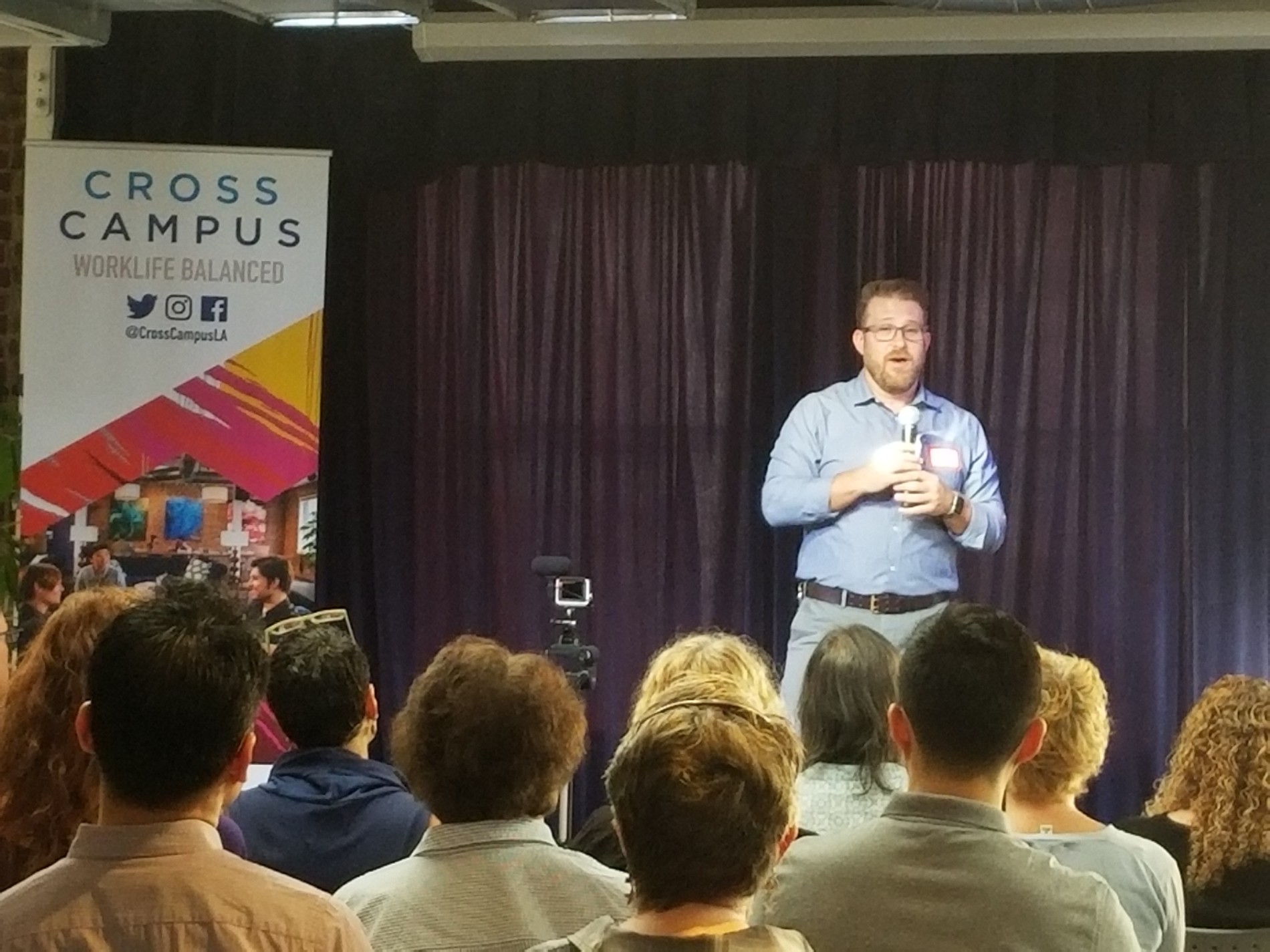
Checkin Cross Campus Old Pasadena
Checkin City of Pasadena Schoolhouse Garage
Following Matt Reed
In which a veteran of cultural studies seminars in the 1990s moves into academic administration and finds himself a married suburban father of two. Foucault, plus lawn care.

I think the much stronger and better solution for one’s personal commonplace book is to simply add these intents to one’s own website and either favorite, bookmark, mark as read, repost, reply to, annotate, highlight, or just about “anything else” them there and syndicate the appropriate response to Twitter separately. (Examples: bookmarks and reads.) This makes it much more difficult to muddle the intent. It’ll also give you a much more highly searchable set of data that you can own on your own website.
Why wait around for Twitter or another social service to build the tools you want/need when it’s relatively easy to cobble them together for yourself on a variety of opensource platforms? While you’re at it, remove some of the other limitations like 280 characters as well…
RSVP to Innovate Pasadena: The Power of Social Capitalism
I am excited to share the story of Rosebud Coffee; a social enterprise dedicated to helping homeless and transitional age youth find economic stability through the coffee industry. Local businesses are uniquely positioned with social capital to help those in need flourish with the support of the local community. And when those in greatest need flourish, so does everyone else!
Bio: Dan Davidson is the Lead Pastor of Rose City Church in Pasadena, CA; a historic Free Methodist Church he and team reopened in 2011. Dan is also the co/founder and Executive Director of Rose City Coffee; a barista training program for homeless and transitional-aged youth soon to open as a local coffee shop. Most recently Dan led a team to open Rosebud Coffee as a local cafe in the City of Pasadena to hire the youth trained by Rose City Coffee. As a socially minded cafe, Rosebud seeks to help the emancipated youth of our city flourish while also providing a space for community events. Dan enjoys collaborating with the City of Pasadena, local businesses and non-profits who share the same goal of ending homelessness and improving the lives of local neighbors. Dan believes that with such partnerships the relationships that keep communities healthy will thrive.
Contact Email: dan@rosecitycoffee.org
Friday, March 30, 2018
8:15 AM to 9:30 AM
Cross Campus
85 N. Raymond Avenue, Pasadena, CA
Venue is located on the 2nd floor. Free street parking until 11:00 am; except where valet signs are posted. 90 minutes free parking is also available at nearby parking lots.