The influence of social media platforms and technology companies is having a greater effect on American journalism than even the shift from print to digital. There is a rapid takeover of traditional publishers’ roles by companies including Facebook, Snapchat, Google, and Twitter that shows no sign of slowing, and which raises serious questions over how the costs of journalism will be supported. These companies have evolved beyond their role as distribution channels, and now control what audiences see and who gets paid for their attention, and even what format and type of journalism flourishes.
Publishers are continuing to push more of their journalism to third-party platforms despite no guarantee of consistent return on investment. Publishing is no longer the core activity of certain journalism organizations. This trend will continue as news companies give up more of the traditional functions of publishers.
This report, part of an ongoing study by the Tow Center for Digital Journalism at Columbia Journalism School, charts the convergence between journalism and platform companies. In the span of 20 years, journalism has experienced three significant changes in business and distribution models: the switch from analog to digital, the rise of the social web, and now the dominance of mobile. This last phase has seen large technology companies dominate the markets for attention and advertising and has forced news organizations to rethink their processes and structures.
Author: Chris Aldrich
I'm a biomedical and electrical engineer with interests in information theory, complexity, evolution, genetics, signal processing, IndieWeb, theoretical mathematics, and big history.
I'm also a talent manager-producer-publisher in the entertainment industry with expertise in representation, distribution, finance, production, content delivery, and new media.
Numerous users are reporting that their negative tweets about United Airlines' inhumane treatment of a passenger have been disappearing from Twitter.
🎧 This Week in Google #399: Oath It!
YouTube TV launches in 5 US cities with a sports-heavy lineup that could end cable dominance once and for all. Google will combine Google Home and mesh Wi-Fi. Facial Recognition will end all privacy. Facebook, Mozilla, and Craigslist founders will fight fake news with new $14 million foundation. The American botnet that helps Trump take over Twitter. James Comey's personal Twitter account sleuthed.

My first try at home made matzo ball soup! Next time I’ll use schmaltz.

Instagram filter used: Clarendon
Photo taken at: Glendale, California
Checkin Super King Market
What a nice selection of oils… All in massive bottles!

Checkin Coffee Bean & Tea Leaf
Large Chai Tea Latte

🎞 Mr. Blandings Builds His Dream House (RKO Radio Pictures, 1948)
A man and his wife decide they can afford to have a house in the country built to their specifications. It's a lot more trouble than they think. Director: H.C. Potter; Writers: Eric Hodgins (novel); Norman Panama and Melvin Frank; Stars: Cary Grant, Myrna Loy, Melvyn Douglas |
It’s always fun to watch classic pictures like this one. They’re such an interesting look back on the subtleties of how the world used to be. This is a great example of when married couples had separate beds, men used shaving brushes, there were shower caps, everyone wore hats, and electric razors were becoming popular. The opening in particular has some interesting social commentary about society, class, and progressiveness. It also has commentary on advertising and people apparently becoming more open to having analysts (therapists).
This even has a snippet about current fashion in home decoration with mentions of a cobbler’s bench, a breakfront, a hooked rug, a pie cooler (whatever that is), and a Martha Washington desk.
An interesting linguistic relic I caught in the opening was a phrase that “New York has 7 millions” [referring to number of people]. Today, most would use the singular million instead.
I could easily see a case one could build for the original book and this film as the likely inspiration and precursors for comedies like The Money Pit (Universal, 1986), Funny Farm (Warner Bros., 1988), and even a bit of Baby Boom (United Artists, 1987).
I’m curious to know in how many movies Cary Grant played an advertising executive. Leading characters with this profession during this time period must have been romantic seeming at the time, but they always give an additional layer of meaning when watching them decades after the fact.
Quotes
Mr. Blandings (in his best pitch-man voice talking about his razor): “I prefer the clean sweep of the tempered steel as it glides over…”
Mrs. Blandings (curtly): “No advertising copy please.”
Bill Cole: “I had no intention of sending you to Reno.”
(At the time Reno was one of the few (only) places to grant divorces.)
Interesting tidbits of history
This was a Dory Schary presentation when he was still at RKO prior to his reign at MGM. The generally great black and white cinematography was by a mid-career prolific journeyman cinematographer James Wong Howe. This also features an appearance of Jason Robards. Robards Sr. that is, father to the more well known Jason Robards, Jr.

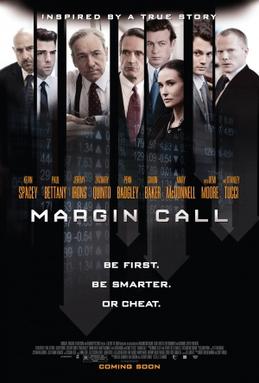
🎞 Margin Call (Lionsgate, 2012)
Follows the key people at an investment bank, over a 24-hour period, during the early stages of the 2008 financial crisis. Director: J.C. Chandor; Writer: J.C. Chandor; Stars: Zachary Quinto, Stanley Tucci, Kevin Spacey, Jeremy Irons, Demi Moore
An interesting morality play of sorts. Not quite as compelling as The Big Short. Though there was some finger-pointing and drum beating on the morality issue, it wasn’t nearly as on-the-head as I expected it to be.
More interesting to me would have been some of the backstory of the people letting things slide along the way. I would have liked to know and see more about the last-minute dealmaking a trading firm does when it has an incredibly good idea that it’s not going to be a going concern anymore. Here this piece was sadly brushed under the rug a bit as was the broader effect on the every day consumer.
Watched via Amazon Prime on iPad.
Test to see if superfeedr picks this up
Test to see if superfeedr picks this up
🎞 The Edge of Tomorrow (Warner Bros., 2014)
A soldier fighting aliens gets to relive the same day over and over again, the day restarting every time he dies. Director: Doug Liman; Writers: Christopher McQuarrie (screenplay), Jez Butterworth (screenplay); Stars: Tom Cruise, Emily Blunt, Bill Paxton, Brendan Gleeson; Genres: Science Fiction, Adventure, Action
I’ve had this on the HD-DVR for ages and I’m not sure why I’d skipped over it so many times. I should have known that Doug Liman wouldn’t disappoint.
Certainly an entertaining ride for a time-shifting movie in the vein of Groundhog Day (1993) for the time function while more similar to Inception (2010) for the action and drama.

Checkin Starbucks
Adjusting my mood…

👓 Donald Trump launches US missile strike against Syria after chemical attack – live | The Guardian
American military strike hits airbase in Syria in retaliation for what US president called ‘horrible chemical weapons attack’ in Idlib
The lawsuit filed Thursday contends the government is threatening free speech.
In the past three years, police shootings have sparked an unprecedented series of protests across the country.
Interesting online storytelling here.
Trump ignored transition planners during the campaign, then did things his way after he won. The administration is still playing catch up.