I’ve been watching the secondary market for used card indexes for a while and finally caved and purchased a vintage wooden desk top Shaw-Walker 11 inch card index for 3 x 5″ index cards. It was dusty and dirty and in reasonably good shape, but with some cleaning and some wood polish, it’s in much better shape.
I removed the original tacks on the bottom which appeared to have once held down some red felt. I cut out a new rectangle of green felt and reattached the tacks so that the index won’t scratch up my desktop. The dovetails are in good shape, but it seems like in a year or two some of the joins may need to be re-glued.
In all, for a small $10.00 investment, it’s a stunning addition for my zettelkasten card collection. Compared to some of the cardboard and metal options out there, it was half the price, but is far prettier and infinitely more durable.
Of course I’ve got a strong preference for 4 x 6″, so I’ll be on the look out for something bigger, but this was just too good a deal to pass up. Perhaps I’ll use it like a Memindex or a related productivity tool?
AcquiredOranges by John McPhee(Farrar, Strauss, & Giroux )
A classic of reportage, Oranges was first conceived as a short magazine article about oranges and orange juice, but the author kept encountering so much irresistible information that he eventually found that he had in fact written a book. It contains sketches of orange growers, orange botanists, orange pickers, orange packers, early settlers on Florida's Indian River, the first orange barons, modern concentrate makers, and a fascinating profile of Ben Hill Griffin of Frostproof, Florida who may be the last of the individual orange barons. McPhee's astonishing book has an almost narrative progression, is immensely readable, and is frequently amusing. Louis XIV hung tapestries of oranges in the halls of Versailles, because oranges and orange trees were the symbols of his nature and his reign. This book, in a sense, is a tapestry of oranges, too—with elements in it that range from the great orangeries of European monarchs to a custom of people in the modern Caribbean who split oranges and clean floors with them, one half in each hand.
Picked up some new books from Lost Books, one of the few remaining used book shops around. Almost concerning that I can often find exceptional copies of first editions for so little. 📚
An unexpected gift from my friends at Hypothes.is
A surprise gift box from Hypothes.is with load of goodies!
I really ought to have gotten them the gift for the value that their fantastic tool has brought me.
I suppose if you’re gonna goin “all-in” on having a zettelkasten (slip box) or index card-based commonplace book you may as well invest in some serious atomic-era heavy steel hardware…
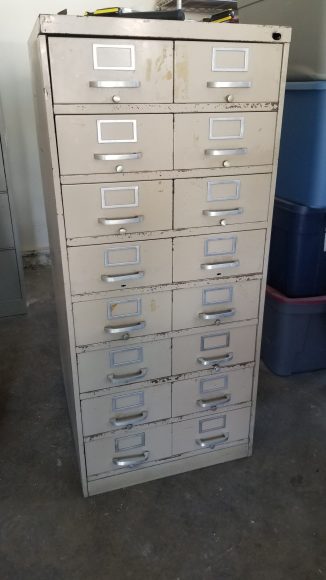
So today I took the plunge and picked up a Singer Business Furniture 20 gauge steel industrial index card filing cabinet. It’s the sort of thing that Niklas Luhmann or Roland Barthes may have only dreamt of.
One of the double drawers pulled out.
The monster has 8 sliding platform chassis with 16 removable file drawers. I’ve done a little bit of clean up on it, but it has been well loved over time. Much like my prior furniture refurbishment projects, I expect I’ll bead blast off the original finish and rust and re-enamel it. I’m debating colors or potentially going brushed steel with heavy clear coat, though that’s a lot of work for the size and configuration. I’m initially thinking perhaps gunmetal grey with metallic blue flecked paint to match my desk, or perhaps a fun orange highlight color on the drawer fronts?
Specifications
Singer Business Furniture, Corry Jamestown index card filing cabinet (114 OB)
8 slider chassis with 16 individually (and easily) removeable drawers
Exterior dimensions: 22 7/8″ wide x 52″ tall x 28 3/4″ deep
Interior drawer dimensions: 9 3/8″ wide x 4 3/4″ tall x 27 3/8″ deep (or 26 1/8″ deep with the card stops installed)
Original industrial beige color, chipped and scratched
20 gauge steel
I thought about weighing it, but the thing is just too big for any of the nearby scales I’ve got access to. It’s definitely a bear to move even by sliding and required a heavy dolly and at least two people to maneuver. Three or more would be required to pick it up physically. One drawback to the size and weight is that it isn’t easily portable if there were an emergency, but the construction is so solid that it should definitely survive the most dire earthquakes or possibly nuclear bomb blasts. I suspect it’ll be a bit before I have multiple drawers full, so I can always individually remove active drawers.
A quick calculation on the front of an index card—no more backs of envelopes for me!—indicates that packs of relatively standard Oxford index cards should put the capacity of this monster at 55,700 index cards (with the drawer stops in place).
Photos
It’s going to need some rehab work, but it’s quite magestic
Front view of the massive slip box
One of the double drawers pulled out.
View of one of the individual drawers from above
Almost all the drawers have their original index card rods
Some 4×6 index cards ready for action
One of the individual file drawers removed and sitting on its mate.
The original Singer sticker on the top inside drawer
Close up of the thumbscrew and notch on one of the index card file rods
Each index card file rod slots has a small “key” notch for securing it
Close up of the metal file card stop
A simple spring clip mechanism makes the card stops easy to move
It’s the small touches like the thumb indent on the card stop that really make the difference
An internal piece of the cabinet that wasn’t painted at the factory
Some of the trash that was cleaned out of the cabinet
Features
The drawers should be nice and roomy for the 4×6″ index cards I’ve been using, but can also accommodate collections of smaller 3×5″ cards I’ve got.
While the drawers come with index card rods to hold the cards physically in their files, I suspect I won’t be using them. They seem to be of a design that would require custom cards for utilizing this feature anyway. I do quite like the rod design as the thumbscrews on the outside have small nubs on them with a key-like cut out on the drawer front with a compression washer. One then inserts the rod, fits it into the moveable card stop, and pushes it into the keyhole. A quarter or half turn of the rod and thumbscrew locks the rod into the cabinet.
The index card file stops are easily removable and have a simple springloaded clamp mechanism for moving them easily within the drawer.
While used, the entire thing is in generally excellent shape. Almost all the original hardware is still extant and the drawer mechanisms all slide smoothly, so those won’t require much, if any real work.
Because the filing cabinet is so massive and generally immovable, a fun and terrifically convenient feature is that each of the 16 file drawers are individually removable. This allows one to take a particular drawer or two to their desk and work on them before needing to return them to the cabinet when one is done. To make this drawer movement easier, in addition to the explicit handle on the front of each drawer, there’s an oval hole on the back of each drawer which functions as a handle on the other end. This is likely how I’ll use it, at least until I’ve refinished the cabinet and the drawers and move it into my office space permanently.
One of the individual file drawers removed and sitting on its mate.
Because the files are wide and long enough, I might also profitably use the file for holding 8 1/2 x 11″ material stacked up in piles if necessary.
Naming
Some have talked about naming their zettelkasten. I’ve been considering calling the whole cabinet “The Ark of Studies” (Arca studiorum) after Thomas Harrison’s invention in the 1640s as it also contains a nod to Hugh of St. Victor’s mnemonic work relating to Noah’s Ark. Perhaps I’ll hame it Stonehenge II, because I’ll rely on it as a “forgetting machine” and it’s almost as big and heavy as a bluestone from the Preseli Hills in Wales—especially if I paint it that color. Beyond this perhaps I might give each individual drawer a name. This leaves sixteen slots, so I’m thinking about naming them after famous figures in the history of note taking and related spaces of intellectual history.
Right now it’ll likely be a subset of Aristotle, Cicero, Quintilian, Seneca, Boethius, Thomas Aquinas, Desiderius Erasmus, Rodolphus Agricola, Philip Melancthon, Konrad Gessner, John Locke, Carl Linnaeus, Thomas Harrison, Vincentius Placcius, Gottfried Wilhelm Leibniz, Niklas Luhmann, Beatrice Webb, Marcel Mauss, Claude Lévi-Strauss, Mortimer J. Adler, Niklas Luhmann, Roland Barthes, Vladimir Nabokov, George Carlin (I’ve got to have a drawer dedicated to comedy right?), Twyla Tharp, and Eminem. Who else am I missing? Who should I consider?
Oddities
Being a piece of used office furniture, it naturally came with some surplus junk inside. Most of this was of the paperclip and rubber band nature with plenty of dust and lint. There were a full collection of drawer labels with someone’s handwritten numbers for the files the card index once contained. Unexpected finds included some screws, nuts and bolts, part of a hacksaw blade, a rotary saw blade, some drill bits, a socket wrench fitting, and—most puzzling—a live round of ammunition! Every zettelkasten should have one of these right?
The oddest thing I found hiding in my new slip box.
So go ahead and bite the bullet! Get your own cabinet, and start your analog zettelkasten today.
SET OF 30 NOTECARDS – Evoking memories of book-filled libraries, the Card Catalog: 30 Notecards from The Library of Congress reproduces the original cards used to keep track of literary classics.
HISTORIC DESIGNS – Enclosed in a keepsake cardboard replica card catalog box with tabbed dividers, each card features a different beloved work from the storied collection of the Library of Congress.
INCLUDED – This vintage notecard set includes a box tray with slipcase, 30 color cards (30 different designs), 30 envelopes, and 5 tabbed dividers.
MAKES AN EXCELLENT GIFT – This gorgeously designed notecard set makes an inspired gift for any writer or fan of The Library of Congress.
You know you might be in deep with the area of tools for thought, note taking, zettelkasten, intellectual history et al., when your loved ones are gifting you card catalog boxes with replica author index cards from the Library of Congress for stationery use for your birthday.
This small box is made of heavy cardboard and is incredibly well done to look like actual dovetailed oak. The replica cards are quite a joy to browse through. I almost don’t want to use them as the stationery they were intended to be.
The minute we saw Aaron's frantic, hand-lettered presentation of the Field Notes credo we knew just what to do. And here it is.
In December, when Field Notes co-founder Aaron Draplin hijacked our site to sell pre-orders of his totally amazing Leap of Faith Edition 3-Packs, we went along with it. TBH, we’ve learned over the years that once Aaron gets fixed on an idea, there’s pretty much no stopping him. However, when he sent us the artwork for the Memo Books, we decided to do little hijacking of our own. The minute we saw his frantic, hand-lettered presentation of the Field Notes credo — “I’m not writing it down to remember it later, I’m writing it down to remember it now” — we knew just what to do. And here it is.
You might have gone down the rabbit hole on note taking practice nerdery when you’re getting note taking related t-shirts. Better than a mug I suppose…
With two planner books and one checklist book, our Ignition Edition 3-Pack for Winter 2021 is the perfect place to keep track of all of your things to do.
4, 3, 2, 1… IGNITION
We all need a place to jot down the first sparks of a big new idea, to record our “notes to self,” and to remind ourselves to pick up the doggo at 4 p.m. on Thursday. Our regular Field Notes Planner is great, but we’re frequently asked for a smaller edition. Our previous limited-edition pocket planners (the long-gone Ambition and Resolution editions) were also great, but we wanted to find a way to fit even more into a Memo-sized date book.
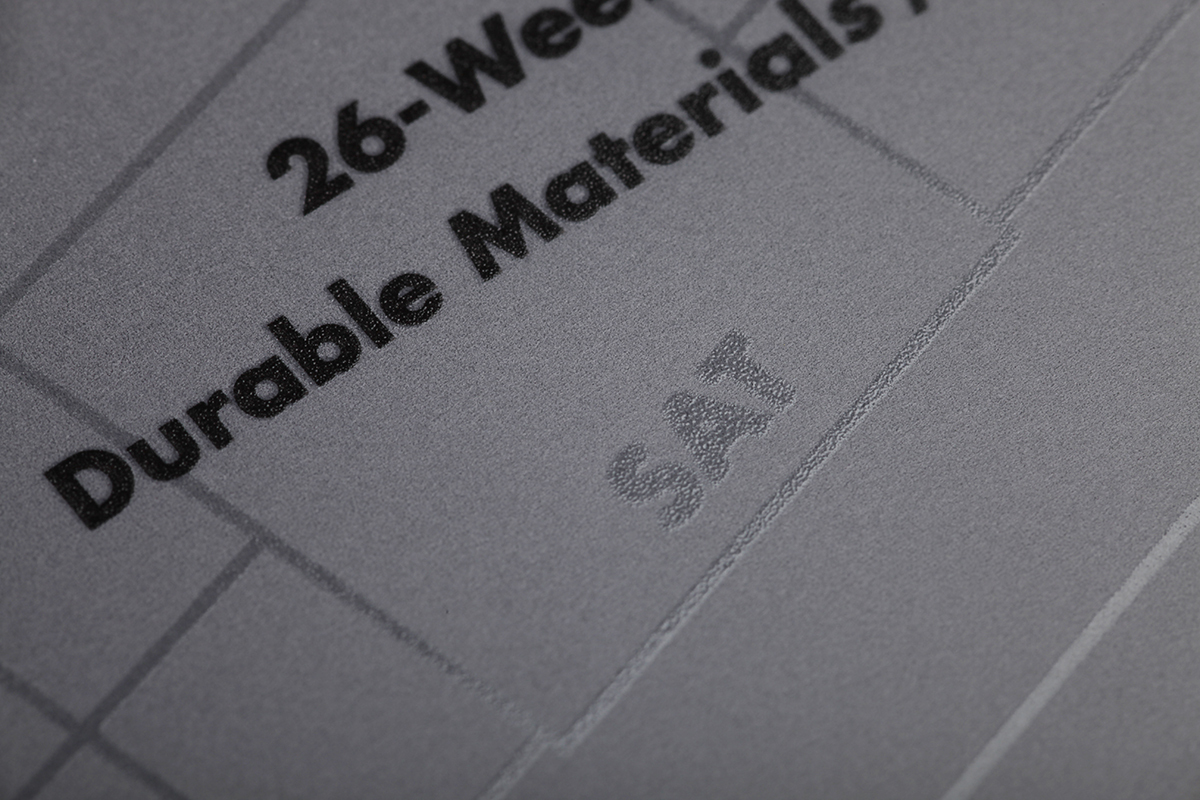
You’ll find that the new Winter 2021 “Ignition” set checks all the boxes. Each 3-Pack contains two 26-Week Planners. Splitting the year into two books gives you a full spread for each week, making more space for each day and incorporating a weekly “To do, or…” list that can be used for productivity OR inspiration. Each page also features a bit of practical advice, direct from Field Notes staff. Note that the pages are undated, allowing you to start either book anytime and fill in the dates as you go.
The third book is a “Checklist Journal” featuring the popular “Screwhead Device” that we introduced in the 2017 “Resolution” Edition. it's great for to-do lists or bullet journaling… or ignore the Screwheads, and use it like any ruled notebook.
The covers are made from water-and-tear-proof synthetic paper from Yupo that will hold up to a whole year’s worth of abuse. The book’s interior page design is subtly varnished over the cover color. The innards are our reliable 60# Finch with gray rules, bound with black staples.
POINTY. SHINY. HANDY.
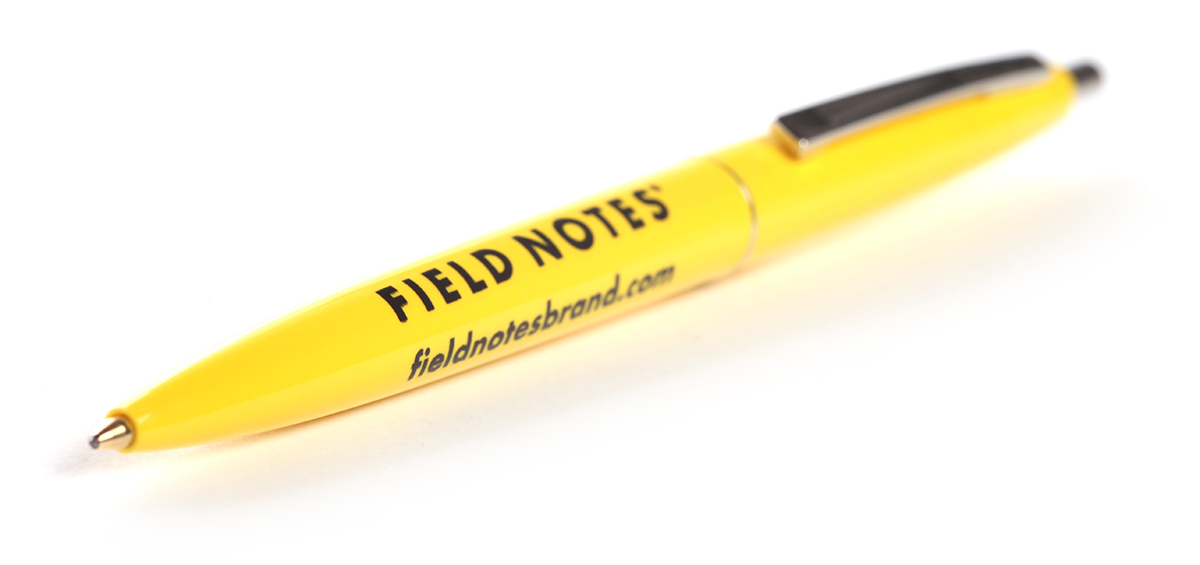
Quarterly Subscribers receive a bunch of bonus items with their order this quarter! Along with your two 3-Packs of “Ignition,” we’re including a carded set of three stainless steel Book Darts. They’re perfect for marking your place as you work through the date books. An “Ignition Yellow” Clic Pen and a two-sided 2022 “One Sheet Calendar” are also included with your subscription shipment. Subscribing is the only way to get these items, and of course you'll get the next three editions, their accompanying bonus items, and a yearlong 10% discount on most items on the website. What’s in store for subscribers for 2022? There’s only one way to find out!
By the way: If you check your planner, you’ll see there are a variety of gift-giving holidays coming up, what would make a better quarterly reminder of your generosity than a year’s worth of Field Notes?
SPECIFICATIONS:
01. Proudly printed by the good people of Lake County Press, Inc., Waukegan, Ill.
02. Cover: Yupo Synthetic 74#C “White,” with a brute force application of “Ignition Gray, Yellow, and Black” soy-based Toyo UV inks and a spot UV varnish.
03. Innards: Finch Paper Opaque Smooth 60#T “Bright White,” with a fine, 1-color application of “Ignition Light Gray” soy-based Toyo ink.
04. Cover and innards printed on a Heidelberg Speedmaster XL 105 40" 6-color UV printing press.
05. Bound with a Heidelberg Stitchmaster ST 270 5-pocket saddle stitcher with cover feeder/scorer and Rima RS 10S in-line stacker, with appreciation to Samuel Slocum, George W. McGill, and William J. Brown, the “Founding Fathers of the Staple.”
06. Corners precisely rounded to a 3/8" (9.5mm) radius with a Challenge DCM double round-corner machine.
07. Edition features two 26-Week Date Books and one 56-Page Checklist Journal.
08. Memo book dimensions are 3-1/2" × 5-1/2" (89mm × 140mm).
09. FIELD NOTES uses only the Futura typeface family (Paul Renner, 1927) in its materials.
10. All FIELD NOTES memo books are printed and manufactured in the U.S.A.
TWSBI Diamond 580, a classic fountain pen with a piston ink-filling system. By fusing the traditional mechanisms of the fountain pen with a modern industrial design, we have created an eye-catching fountain pen that is simultaneously appreciative of the past and relevant in the present. The Diamond 580 comes with a benchmark ink-filling mechanism and has all detachable parts. We felt that it was important to allow the user to disassemble and reassemble the pen and completely experience the traditional aspects of owning and using a fountain pen.
Horse racing was so popular and influential between 1930 and 1960 that nearly 150 racing themed films were released, including A Day at the Races, Thoroughbreds Don't Cry, and National Velvet. This fast-paced, gossipy history explores the relationship between the Hollywood film industry, the horse racing industry, and the extraordinary participation of producers, directors, and actors in the Sport of Kings. Alan Shuback details how all three of Southern California's major racetracks were founded by Hollywood luminaries: Hal Roach was cofounder of Santa Anita Park, Bing Crosby founded Del Mar with help from Pat O'Brien, and Jack and Harry Warner founded Hollywood Park with help from dozens of people in the film community. The races also provided a social and sporting outlet for the film community -- studios encouraged film stars to spend a day at the races, especially when a new film was being released. The stars' presence at the track generated a bevy of attention from eager photographers and movie columnists, as well as free publicity for their new films. Moreover, Louis B. Mayer, Bing Crosby, Fred Astaire, Betty Grable, and Don Ameche were all major Thoroughbred owners, while Mickey Rooney, Chico Marx, and John Huston were notorious for their unsuccessful forays to the betting windows.
It’s a covert game of cat and mouse set on the streets of London! Criminal mastermind Mr. X has escaped Scotland Yard and it’s up to you, the detectives, to catch him! Use your travel tickets to anticipate his movements, chasing him by taxi, bus, and underground, around Picadilly Circus, along the River Thames, and through Paddington Station. Will you apprehend this dangerous criminal or will he disappear in the London fog?
How to Play:
1. Choose a Mr. X and give that player a player piece, travel log with cover, and special travel tickets. Give the remaining players – the detectives – their player pieces and travel tickets.
2. Players draw cards indicating the number of the station where they will begin play and place their player pieces on those stations. Mr. X draws a card indicating his starting space and notes it in his travel log without placing his player piece there.
3. Players take turns selecting the appropriate travel tickets (taxi, bus, underground) to move them from station to station, anticipating Mr. X’s arrival. Mr. X notes his moves in his secret travel log, surfacing only on specific moves but revealing the ticket he uses to get to his next undisclosed location.
4. Players work together to anticipate where Mr. X will surface next and beat him to that station.
5. If a player piece is on the station Mr. X noted in his secret travel log, that player wins the game. If all players use all travel tickets without capturing Mr. X, Mr. X wins the game.
Recommended Age: 8 and up Players: 2-6 Play Time: 45-60 minutes Includes: 1 game board, 6 playing pieces, 29 start tickets, 130 tickets for different means of transportation, 1 travel log for Mr. X, 1 visor for Mr. X, 2 inserts, 2 rings for bobbies
Purchased from Puzzle Warehouse. Should arrive in a few days via ground shipping.
I got an original version of this when I was about 10 and remembered loving it.
The 5th edition (published 2013) of the 16-inch diameter plastic Guide to the Stars chart is an instrument to help you identify the constellations. You simply dial-in your observing time and date to find the set of constellations visible in your sky (this is accomplished by turning the clear top piece). Although this chart is designed for beginners, seasoned amateur astronomers will find it useful, too.
This chart can be used anywhere in the world between latitudes 30 and 60 degrees North, which includes the US and Canada, England, Europe, Northern China and Japan.
The 16-inch diameter is large and easy to read, ideal for families, teachers and seniors! The 5th edition has been improved by indicating more binocular objects and providing more pertinent information on the back, all without increasing clutter or decreasing the text size.
The front chart indicates 70 Constellations, the Names of 55 Stars, the Milky Way Band, the Ecliptic (which is the path of the Sun, Moon and Planets), 54 favorite Double Stars, the Summer Triangle, Winter/Summer Tours and 56 Galaxies, Star Clusters and Nebulae that can be observed with binoculars or a small telescope. Additionally, favorite star patterns are noted, like the Great Square of Pegasus, the Circlet of Pisces, the Northern Cross of Cygnus and others.
On the back side, there are useful tables and other astronomical information, including: Mythology, Yearly Meteor Showers, Moon map, Phases of the Moon, Facts about the Planets, A Short history of Astronomy, the 10 Brightest Stars, Information about the Binocular & Telescope Objects (those on the chart), Why Stars Twinkle, additional instructions for using the chart and more.
PLANET NOTE. Most star charts, like this one, do not indicate, on the chart, the position of the Planets or Moon because these objects move through the constellations of the zodiac, along a path in the sky called the Ecliptic (indicated on the chart). Website support is provided to help identify the planets that are visible in the sky.