A New Way to “Know and Master Your Social Media Flow”

I was reminded this morning that two years ago yesterday FriendFeed, one of my favorite social media sites, was finally shut down after years of flagging support (outright neglect?) after it was purchased by Facebook.

This reminded me of something which I can only call one of the most hurtful diagrams I saw in the early days Web 2.0 and the so-called social web. It was from an article from May 16, 2009, entitled Know and Master Your Social Media Flow by Louis Gray, a well-known blogger who later joined Google almost two years later to promote Google+.

Here’s a rough facsimile of the diagram as it appeared on his blog (and on several syndicated copies around the web):

Louis Gray’s Social Media Flow Diagram from 2009

His post and this particular diagram were what many were experimenting with at the time, and certainly inspired others to do the same. I know it influenced me a bit, though I always felt it wasn’t quite doing the right thing.

Sadly these diagrams all managed to completely miss the mark. Perhaps it was because everyone was so focused on the shiny new idea of “social” or that toys like Twitter, Facebook, FriendFeed, and thousands of others which have now died and gone away were so engaging.

The sad part in searching for new ways to interact was that the most important piece of the puzzle is right there in his original diagram. No, it’s not the sorely missed FriendFeed service represented by the logo in the middle, which has the largest number of arrows pointing into or out of it. It’s not Facebook or Twitter, the companies which now have multi-billion dollar valuations. It’s not even the bright orange icon representing RSS, which many say has been killed–in part because Facebook and Twitter don’t support it anymore. The answer: It’s the two letters LG which represent Louis Gray’s own personal website/blog.

Sadly bloggers, and thousands upon thousands of developers, lost their focus in the years between 2007 and 2009 and the world is much worse off as a result. Instead of focusing on some of the great groundwork that already existed at the time in the blogging space, developers built separate stand-alone massive walled gardens, which while seemingly democratizing the world, also locked their users into silos of content and turned those users into the actual product to monetize them. (Perhaps this is the real version of Soylent Green?) Most people on the internet are now sharecropping for one or more multi-billion dollar companies without thinking about it. Our constant social media addiction now has us catering to the least common denominator, unwittingly promoting “fake news”, making us slower and less thoughtful, and it’s also managing to slowly murder thoughtful and well-researched journalism. Like sugar, fat, and salt, we’re genetically programmed to be addicted, and just like the effect they have on us, we’re slowly dying as a result.

The new diagram for 2017

Fortunately, unlike for salt, fat, and sugar, we don’t need to rely on simple restraint, the diet of the week, or snakeoil to fix the problem. We can do what Louis Gray should have done long ago: put ourselves, our identities, and our web presences at the center of the diagram and, if necessary, draw any and ALL of the arrows pointing out of our own sites. Facebook, Twitter, Instagram, LinkedIn, FourSquare/Swarm, etc. can all still be there on our diagrams, but the arrows pointing to them should all originate from our own site. Any arrows starting with those same social networks should ALL point (only) back to our sites.

This is how I always wanted my online diagram to look:

This is how I always thought that the diagram should have been drawn since before 2009. Now it can be a reality. POSSE definition. Backfeed definition.

How can I do this?

In the past few years, slowly, but surely, I’ve managed to use my own website to create my diagram just like this. Now you can too.

A handful of bright engineers have created some open standards that more easily allow for any website to talk to or reply to any other website. Back in January a new W3C recommendation was made for a specification called Webmention. By supporting outgoing webmentions, one’s website can put a link to another site’s page or post in it and that URL serves the same function as an @mention on services like Twitter, Facebook, Medium, Google+, Instagram, etc. The difference here is that these mentions aren’t stuck inside a walled garden anymore, they can reach outside and notify anyone anywhere on the web that they’ve been mentioned. Further, it’s easy for these mentions to be received by a site and be posted as comments on that mentioned page. Because the spec is open and not controlled by a third party corporation, anyone anywhere can use it.

What does this mean? It means I can post to my own site and if you want to write a comment, bookmark it, like it, or almost anything else, you post that to your own website and mine has the option of receiving it and displaying it. Why write your well thought out reply on my blog in hopes that it always lives there when you can own your own copy that, though I can delete from my site, doesn’t make it go away from yours. This gives me control and agency over my own platform and it gives you ownership and agency over yours.

Where can I get it?

Impatient and can’t wait? Get started here.

More and more platforms are beginning to support this open protocol, so chances are it may already be available to you. If you’re using an open source platform like WordPress.org, you can download a plugin and click “activate”. If you want to take few additional steps to customize it there’s some additional documentation and help. Other CMSes like Known have it built in right out of the box. Check here to see if your CMS or platform is supported. Don’t see your platform listed? Reach out to the developers or company and ask them to support it.

If you’re a developer and have the ability, you can easily build it right into your own CMS or platform of choice (with many pre-existing examples to model off if you need them) and there are lots of tools and test suites built which will let you test your set up.

If you need help, there are people all over the world who have already implemented it who can help you out. Just join the indieweb in your favorite chat client option.

Some parting thoughts

Let’s go back to Louis Gray’s blog and check on something. (Note that my intention isn’t to pick on or shame Mr. Gray at all as he’s done some excellent work over the years and I admire it a lot, he just serves as a good public example, particularly as he was recruited into Google to promote and launch G+.)

Number of posts by year on Louis Gray’s personal blog.

If you look at his number of posts over time (in the right sidebar of his homepage), you’ll see he was averaging about 500+ posts a year until about the time of his diagram. That number then drops off precipitously to 7 and 5 in 2015 and 2016 respectively!! While life has its vagaries and he’s changed jobs and got kids, I seriously doubt the massive fall off in posts to his blog was because he quit interacting online. I’ll bet he just moved all of that content and all of his value into other services which he doesn’t really own and doesn’t have direct control over.

One might think that after the demise of FriendFeed (the cog at the center of his online presence) not to mention all the other services that have also disappeared, he would have learned his lesson. Even browsing back into his Twitter archive becomes a useless exercise because the vast majority of the links on his tweets are dead and no longer resolve because the services that made them died ignominious deaths. If he had done it all on his own website, I almost guarantee they’d still resolve today and all of that time he spent making them would be making the world a richer and brighter place today. I spent more than twenty minutes or so doing a variety of complicated searches to even dig up the original post (whose original URL had moved in the erstwhile) much less the original diagram which isn’t even linked to the new URL’s post.


How to Write in Japanese – a guest post from jlptbootcamp | The Memrise Blog

Read How to Write in Japanese – a guest post from jlptbootcamp (The Memrise Blog)
If you are learning Japanese on Memrise, you have probably come across one of our most active and long standing contributors, jlptbootcamp. Other than adding and editing a good proportion of the wo…
Continue reading How to Write in Japanese – a guest post from jlptbootcamp | The Memrise Blog

My First Internet Meme! 🍍

Joining Mastodon.social

A few months ago, I was reading Hacker News and saw a note about the new social media platform Mastodon built on top of GNU Social. Then, through the IRC chat logs, I came across another mention of the platform by Kevin Marks. Shortly thereafter, he appeared on This Week in Google talking about it, an episode which I listened to on December 7. Two days later I finally joined Mastodon to see what was going on, though I’d been on GNU Social sites Quitter.se and Quitter.no much earlier.

An early Mastodon experience

I lurked around on the platform for a bit to check it out and then promptly walked away with the determination that it was “just another silo” and I’d prefer to keep posting on my own site and syndicating out if necessary. It wasn’t until ADN (a Twitter-like social media platform that was previously at app.net) was shutting down on March 15th and people were leaving there to find other communities that I was reminded of Mastodon as I was also looking at platforms like 10 Centuries and pnut.io. Others were obviously doing the same thing and it was then that articles began popping up in the more mainstream tech media. I thought I’d give Mastodon another try and popped into my account to see what had changed, how, and importantly could I build any of the functionality into my own site?

Within a few minutes of rejoining and following a few people in the local stream, I was greeted with this:

My immediate thought, having grown up in the South, was “How welcoming–A pineapple!”

A quick comment later and I realized that it was just coincidence.

A flurry of articles about Mastodon

Fast forward about a week, dozens of Mastodon articles later, and last night I’m reading (courtesy of yet another link posted in the #Indieweb chat–hint: if you want to know where the bleeding edge of the social web is, you should be either lurking or participating there) the article What I wish I knew before joining Mastodon: Where I attempt to explain Mastodon through Harry Potter gifs by Qina Liu, the Digital Engagement Editor at The Buffalo News (on Medium for some odd reason rather than The Buffalo News itself).

The article is well written and is a pretty good tutorial on what Mastodon is, how it works, and how to begin participating. Toward the end it also gets into some of the Mastodon culture. Like a great reporter, Liu obviously spent some time to get to know the natives. She finishes off the story with a short vignette on pineapples which I found eerily familiar. Hey, it’s my friend @acw! As the article wears on, I begin to think, “Oh dear, what have I done?!”

I’m excerpting the tail end of the article for more context about the pineapple meme:

Why am I seeing pineapples all over Mastodon?

Alright, so I’m no P.J. Vogt, Alex Goldman or any of the other awesome producers at the podcast “Reply All,” but I’m going to attempt to “Yes, Yes, No” this for you guys.

🍍🍍🍍 on Mastodon got started by Alex Weiner (@acw@mastodon.social), a software developer who uses APL. Since APL sounds like 🍎, he really likes 🍎 and any words including 🍎 like 🎄🍎.

So he started tooting 🍍 to new people as a form of “hello,” “welcome,” “aloha” — and you get the idea.

And he also started boosting toots with 🍍.

So 🍍 became the emoji shorthand for boost.

And 🍍ing also became Internet slang for when your Mastodon follower count surpasses your Twitter follower count.

But pineapple appreciation didn’t end there. Other people started posting 🍍 in their display name.

And even Rochko made a pineapple joke.

So to recap, if you get a 🍍 on Mastodon, it’s…

Plus, pineapples are awesome.

Except if you’re the president of Iceland, who doesn’t like 🍍🍕.

So was that a “Yes, Yes, Yes”?

So apparently my short note about the “meaning” behind the pineapple has helped to turn it into a “thing” on the internet.

For the historians, here’s the thread of the original conversation:

Ultimately, because the pineapple is such a long-standing symbol of welcoming, it has to be a good thing. Right?

So if you were lucky enough to get into Mastodon.social before registration was turned off (maybe they’ll turn it back on one day, or you can get into one of the many other instances), feel free to give me a follow there and enjoy the pineapples.

You’re Welcome! 🍍

📺 Madam Secretary, S3 E18 “Good Bones”

Watched Good Bones, S3 E18 from Madam Secretary (CBS)
Elizabeth enlists the help of a Hollywood starlet to free victims of human traffickers in Kyrgyzstan. Henry's finds the bomb he's been looking for when his undercover agent brings it to a local mall but uncovers an even deadlier plot.
This episode seems to be speaking directly to the fact that the Trump administration has recently called for gutting the budget for State in preference for military spending and how that could potentially play out. Possibly one of the most depressing episodes of this show in memory.

📺 Madam Secretary, S3 E17 “Convergence”

Watched Convergence, S3 E17 from Madam Secretary (CBS)
When a computer sting uncovers the possible mole in the CIA arms smuggling ring, Elizabeth's questioning of the suspect makes her think that a larger, more dangerous force is behind the operation. Also, Henry worries that the doomsday cult is drugging his embedded operative, and Elizabeth and her State Department staff come up with an unorthodox approach to solving black rhino poaching in Namibia. Enrico Colantoni guest stars.
Interesting to see the solution presented for protecting the black rhino. This is an interesting example of the complexity of the world and both how and why science can be used as a tool to move policy.

📺 Madam Secretary, S3 E16 “Swept Away”

Watched Swept Away, S3 E16 from Madam Secretary (CBS)
Elizabeth's landmark global climate treaty with more than 200 countries is jeopardized when China threatens to back out due to her meeting with an ailing Dalai Lama. Also, Henry worries about his undercover operative's safety, and Jay is surprised when Abby serves him with a custody agreement for their daughter.

📺 Madam Secretary, S3 E15 “Break in Diplomacy”

Watched Break in Diplomacy, S3 E15 from Madam Secretary (CBS)
Elizabeth visits the newly elected President Andrada to advise against withdrawing from the Singapore Interchange agreement. Progress is made on the BoJ compound while Jay looks into Kevin Park's research.
The president of Philippines here is a very thinly veiled version of Donald Trump, and as a result makes it an interesting think piece for considering how other countries are viewing the United States right now.

🎧 Backpackers and their food | Eat This Podcast

Listened to Backpackers and their food by Jeremy Cherfas from Eat This Podcast
When you’re on holiday, or just away from home, do you seek out the “authentic” local food, or look for a reassuringly familar logo? Backpackers, keen to distinguish themselves from the vulgar hordes who are merely on holiday, seek out the authentic, at least to begin with. Dr Emily Falconer has been studying women backpackers. That’s her in the photo, doing a little field research over a bowl of something exotic in Thailand. And she says that while they start out seeking the grottiest places to eat, after they’ve been on the road for a while, their thoughts stray guiltily to familiar, comforting foods. I know the feeling Emily Falconer didn’t set out to study backpackers and food, but soon discovered that no matter what the subject, the people she was talking to sooner or later brought up food. I’m no exception, and although I’ve never been a great backpacker myself, I do prefer to seek out reasonably local eating places where I can, and I’ve had some memorable meals as a result. The most memorable of those was in Kunming, China, where I detached myself from the group I was with and went in search of something to eat. I didn’t find it at the food fair that was on at the same time, but in the end I fetched up in a place so authentic it didn’t even have photographs of the food. I indicated to the waiter that I was hungry and he brought me food. I had no idea what any of it was, and aside from one soupy dish that was almost too hot even for me, it was all delicious. Next time I might take with me a book, this book.

Subscribe: iTunes | Android | RSS | More
Support this podcast: on Patreon

A bit surprised that human’s evolutionary predilection against eating foods they’re not familiar with didn’t come up in conversation, but there’s so much rich material here otherwise, I’ll wager it may have been excised for time constraints.

Words of the day: grotty and neophobia

Somehow I’ve never had a bacon sandwich (BLTs, yes, but never just bacon). Will have to remedy that.

🎧 Pecans and history | Eat This Podcast

Listened to Pecans and history by Jeremy Cherfas from Eat This Podcast
The Guadalupe River that flows through Texas used to be known as The River of Nuts, a fact that Wikipedia does not confirm. The nut in question is the pecan, Carya illinoinensis, and the pecan tree is the state tree of Texas. The groves of wild pecans that lined the rivers of Texas are, however, threatened by the very popularity of the nuts they bear, and in particular by the fickle global nut market. The Chinese, you see, have gone nuts for pecans, increasing their purchase of American pecans from 3–4% in 2006 to 30–40% today. And if they abandon the pecan as quickly as they took it up, the wild pecan groves might be abandoned too. All this, and much more, I learned from James McWilliams, professor of history at Texas State University. His new book is one of those delights that looks at the global sweep of human endeavour through a little lens, in this case the pecan. Why it was the Chinese, rather than the French, the English or some other country, that chose to absorb the pecan surplus, I guess we’ll never know. McWilliams told me that Chinese people he spoke to believe the nuts prolong life; irrational as that may seem, no American grower is going to say they don’t. And while the high prices are good news for growers, they’re not so good for people who want pecan-containing industrial food.

Subscribe: iTunes | Android | RSS | More
Support this podcast: on Patreon


I grew up in rural Appalachia eating my fair share of wild pecans and thought I knew a good bit about them. I know even more now…

🎞 Mr. Blandings Builds His Dream House (RKO Radio Pictures, 1948)

Watched Mr. Blandings Builds His Dream House from RKO Radio Pictures
A man and his wife decide they can afford to have a house in the country built to their specifications. It's a lot more trouble than they think. Director: H.C. Potter; Writers: Eric Hodgins (novel); Norman Panama and Melvin Frank; Stars: Cary Grant, Myrna Loy, Melvyn Douglas |
It’s always fun to watch classic pictures like this one. They’re such an interesting look back on the subtleties of how the world used to be. This is a great example of when married couples had separate beds, men used shaving brushes, there were shower caps, everyone wore hats, and electric razors were becoming popular. The opening in particular has some interesting social commentary about society, class, and progressiveness. It also has commentary on advertising and people apparently becoming more open to having analysts (therapists).

This even has a snippet about current fashion in home decoration with mentions of a cobbler’s bench, a breakfront, a hooked rug, a pie cooler (whatever that is), and a Martha Washington desk.

An interesting linguistic relic I caught in the opening was a phrase that “New York has 7 millions” [referring to number of people]. Today, most would use the singular million instead.

I could easily see a case one could build for the original book and this film as the likely inspiration and precursors for comedies like The Money Pit (Universal, 1986), Funny Farm (Warner Bros., 1988), and even a bit of Baby Boom (United Artists, 1987).

I’m curious to know in how many movies Cary Grant played an advertising executive. Leading characters with this profession during this time period must have been romantic seeming at the time, but they always give an additional layer of meaning when watching them decades after the fact.

Quotes

Mr. Blandings (in his best pitch-man voice talking about his razor): “I prefer the clean sweep of the tempered steel as it glides over…”
Mrs. Blandings (curtly): “No advertising copy please.”

Bill Cole: “I had no intention of sending you to Reno.”
(At the time Reno was one of the few (only) places to grant divorces.)

Interesting tidbits of history

This was a Dory Schary presentation when he was still at RKO prior to his reign at MGM. The generally great black and white cinematography was by a mid-career prolific journeyman cinematographer James Wong Howe. This also features an appearance of Jason Robards. Robards Sr. that is, father to the more well known Jason Robards, Jr.

Mr. Blandings Builds His Dream House

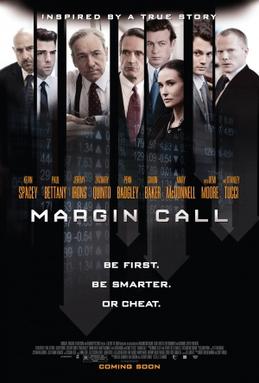
🎞 Margin Call (Lionsgate, 2012)

Watched Margin Call from Lionsgate
Follows the key people at an investment bank, over a 24-hour period, during the early stages of the 2008 financial crisis. Director: J.C. Chandor; Writer: J.C. Chandor; Stars: Zachary Quinto, Stanley Tucci, Kevin Spacey, Jeremy Irons, Demi Moore
An interesting morality play of sorts. Not quite as compelling as The Big Short. Though there was some finger-pointing and drum beating on the morality issue, it wasn’t nearly as on-the-head as I expected it to be.

More interesting to me would have been some of the backstory of the people letting things slide along the way. I would have liked to know and see more about the last-minute dealmaking a trading firm does when it has an incredibly good idea that it’s not going to be a going concern anymore. Here this piece was sadly brushed under the rug a bit as was the broader effect on the every day consumer.

Watched via Amazon Prime on iPad.

Margin Call, Lionsgate, 2012