I see many of my former technology-colleagues now suddenly eager to return to government- or join for the first time- and I'm very excited to work with you all again!
— Bill Hunt (@krusynth) November 9, 2020
That being said, here are a few thoughts from someone who stuck around for the hard parts over the last 4 years.
Month: November 2020
#BREAKING Polls are set to open in 48 hours across the US as the authoritarian regime of Donald Trump attempts to consolidate its hold over the troubled, oil-rich, nuclear-armed, north American nation. Analysts are sceptical the election will end months of political violence.
This is an awesome and socially enlightening thread.
Really excited to host this #OpenEd20 panel tomorrow showcasing some great examples of DIY open courseware from Adeola, Michelle, and Brenna. Come see how they (and you) can use @pressbooks + @H5PTechnology to make engaging, interactive, openly licensed learning happen! https://t.co/geTQRncp4C
— Steel Wagstaff (@steelwagstaff) November 9, 2020
SALEM, Ore. (AP) — Oregon's elections director was abruptly fired in a text message by the secretary of state after he pointed out serious issues with the state's aging and vulnerable technology...
Why have Republican leaders abandoned their principles in support of an immoral and dangerous president?
A fantastic article.
We bring you the strangest, most elusive beasts in the dictionary.
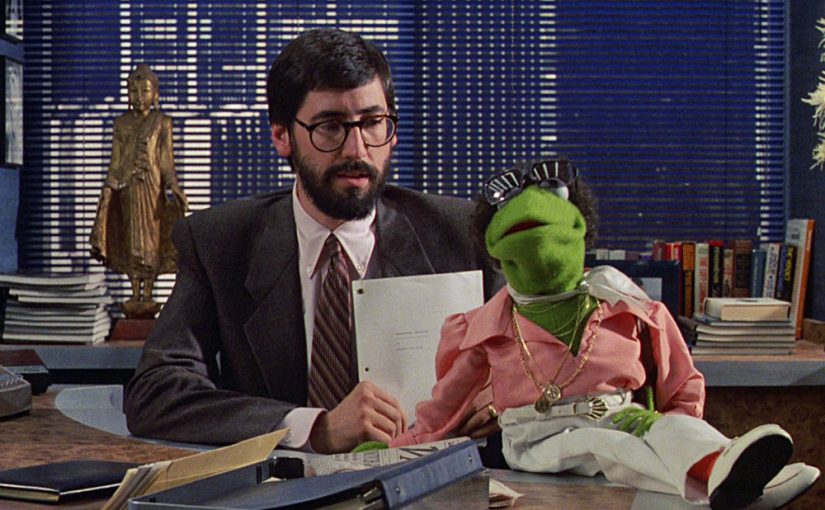
Dictionary lookups of 'boffo' are trending on Merriam-Webster.com.
@maggieNYT There has never been a time in either of my two Campaigns when I felt we had a stronger chance of winning than we do right now. Early voting reports look far stronger than originally anticipated. Every RALLY is BOFFO. @MarkMeadows & team are doing a fantastic job....
— Donald J. Trump (@realDonaldTrump) October 19, 2020
As an expert on the word boffo, I can guarantee that nothing about Trump or anything related to him could be described as such. Biden and democracy on the other hand: boffo and socko.
In the 2020 CBC Massey Lectures, bestselling author and renowned technology and security expert Ronald J. Deibert exposes the disturbing influence and impact of the internet on politics, the economy, the environment, and humanity.
Digital technologies have given rise to a new machine-based civilization that is increasingly linked to a growing number of social and political maladies. Accountability is weak and insecurity is endemic, creating disturbing opportunities for exploitation.
Drawing from the cutting-edge research of the Citizen Lab, the world-renowned digital security research group which he founded and directs, Ronald J. Deibert exposes the impacts of this communications ecosystem on civil society. He tracks a mostly unregulated surveillance industry, innovations in technologies of remote control, superpower policing practices, dark PR firms, and highly profitable hack-for-hire services feeding off rivers of poorly secured personal data. Deibert also unearths how dependence on social media and its expanding universe of consumer electronics creates immense pressure on the natural environment. In order to combat authoritarian practices, environmental degradation, and rampant electronic consumerism, he urges restraints on tech platforms and governments to reclaim the internet for civil society.
hat tip:
Canada’s #MasseyLectures is among the anglosphere’s great lecture series, on par with BBC’s #ReithLectures. This year’s lecturer is @RonDeibert, whose @citizenlab provides forensics and protection for civil society from despots and corporate bullies.https://t.co/Zbw5HI4QYK
— Cory Doctorow #BLM (@doctorow) November 10, 2020
Defunding police is unthinkable but every other tax-funded service—from education to transportation to healthcare to after school programs to libraries to the arts— will be first on the chopping block as a remedy to the economic downturn caused by the mismanagement of COVID-19 1/
— Bree Newsome Bass (@BreeNewsome) November 9, 2020
Not getting enough of #OpenEd20 this week? Bring your ideas to IndieWebCamp East this weekend and let’s go hands-on to build and experiment with them! Free registration is still open.
https://2020.indieweb.org/east
https://2020.indieweb.org/east
For the last four years, the Times reporter has been the human incarnation of a nation riveted, like it or not, by Donald Trump.
Bookmarked on 2020-11-09 at 22:31.
Not quite the functionality you’re looking for, but in the same sort of vein as WorldCat:
Library Extension is a browser extension that works on Amazon, Goodreads (and possibly other book sites) that allows you to register your favorite local libraries, and when you look up books on those services, it automatically searches and shows you which are available at your local library. One click and you can usually download or reserve a copy quickly for pick up.
Library Extension is a browser extension that works on Amazon, Goodreads (and possibly other book sites) that allows you to register your favorite local libraries, and when you look up books on those services, it automatically searches and shows you which are available at your local library. One click and you can usually download or reserve a copy quickly for pick up.
Joining us for IndieWebCamp East this weekend and want an overview of what to expect? Join us now for a conference call to get your questions answered. https://events.indieweb.org/2020/11/indiewebcamp-east-2020-pre-camp-preparation-r3EbFzvmkAhv
An eminent political scientist's brilliant analysis of economic, social, and political trends over the past century demonstrating how we have gone from an individualistic "I" society to a more communitarian "We" society and then back again, and how we can learn from that experience to become a stronger, more unified nation--from the author of Bowling Alone and Our Kids.
Deep and accelerating inequality; unprecedented political polarization; vitriolic public discourse; a fraying social fabric; public and private narcissism--Americans today seem to agree on only one thing: This is the worst of times.
But we've been here before. During the Gilded Age of the late 1800s, America was highly individualistic, starkly unequal, fiercely polarized, and deeply fragmented, just as it is today. However as the twentieth century opened, America became--slowly, unevenly, but steadily--more egalitarian, more cooperative, more generous; a society on the upswing, more focused on our responsibilities to one another and less focused on our narrower self-interest. Sometime during the 1960s, however, these trends reversed, leaving us in today's disarray.
In a sweeping overview of more than a century of history, drawing on his inimitable combination of statistical analysis and storytelling, Robert Putnam analyzes a remarkable confluence of trends that brought us from an "I" society to a "We" society and then back again. He draws inspiring lessons for our time from an earlier era, when a dedicated group of reformers righted the ship, putting us on a path to becoming a society once again based on community. Engaging, revelatory, and timely, this is Putnam's most ambitious work yet, a fitting capstone to a brilliant career.
American Grace is "perhaps the most sweeping look yet at contemporary American religion. It lays out the broad trends of the past fifty years, assesses their sociological causes, and then does a bit of fortune-telling" (The Washington Post).
Unique among nations, America is deeply religious, religiously diverse, and remarkably tolerant. In recent decades, however, the nation's religious landscape has undergone several seismic shocks. American Grace is an authoritative, fascinating examination of what precipitated these changes and the role that religion plays in contemporary American society. Although there is growing polarization between religious conservatives and secular liberals today, at the same time personal interfaith ties are strengthening. Interfaith marriage has increased, and religious identities have become more fluid. More people than ever are friendly with someone of a different faith or no faith at all. Putnam and Campbell show how this denser web of personal ties brings greater interfaith tolerance, despite the so-called culture wars.
Based on two of the most comprehensive surveys ever conducted on religion and public life in America (and with a new epilogue based on a third survey), American Grace is an indispensable book about American religious life, essential for understanding our nation today.