

Instagram filter used: Normal
Photo taken at: Natural History Museum of Los Angeles County
Instagram filter used: Normal
Photo taken at: Natural History Museum of Los Angeles County
It should be noted that an asterisk does not denote a hard problem: we have reserved the dagger for this.


Instagram filter used: X-Pro II

Instagram filter used: Normal
…But nothing would be more devastating than reduced access to a technical library.
One typically wouldn’t take notes from a Spanish, French, or Latin textbook would they? Like most languages, mathematics should be read and written to practice it (and maybe even spoken).
Knowing math or physics is best demonstrated by actually doing problems – and the majority of the time, this is what is going to be on the test too, so just pick up a pencil or pen and start working out the answers.
These subjects aren’t like history, philosophy, or psychology with multiple choice or essay type questions that might benefit from note-taking, so just jump right in. Give the book a short read and start plugging away at problems.
If you have problems getting started, take a look at some of the examples provided by the author (or in other books), cover up the answer, and try to recreate the solution.
Drafting off of the Quora question “Why aren’t math textbooks more straightforward?” I’d suggest reading some of my extended answer here: Why Aren’t Math Textbooks more Straightforward?


Instagram filter used: X-Pro II
Algebra is like French Pastry: wonderful, but cannot be learned without putting one’s hands to the dough.

Instagram filter used: Normal

Instagram filter used: Normal
Photo taken at: Huntington Library

Instagram filter used: Normal
Photo taken at: The Huntington Library, Art Collections, and Botanical Gardens
How can we account for China’s momentous - and almost wholly unanticipated - global rise? And what does it mean, for us in the West and for humanity’s future?
Speaking to these vital and fascinating questions, these 48 penetrating lectures by Professor Baum bring to vivid life the human struggles, the titanic political upheavals, and the spectacular speed of China’s modern rebirth. Offering multilevel insight into one of the most astounding real-life dramas of modern history, the lectures weave together the richly diverse developments and sociopolitical currents that created the China you now read about in the headlines.
You’ll get a detailed understanding of all the core events in China’s century of stunning change, including the collapse of the Qing dynasty, the Republican era and civil wars, the "Great Leap Forward", the Cultural Revolution, and the post-Mao economic "miracle". Throughout, Professor Baum reveals highly unusual details that enrich the cinematic sweep of the story. For example, you’ll learn about the Christian warlord who baptized his troops with a fire hose, the strange kidnapping of Chiang K’ai-shek, and Professor Baum’s own smuggling of top-secret documents out of Taiwan.
A core strength of these lectures is that they make sense of the dramatic events of the story by getting deeply at what underlay them, culturally, socially, and historically - leaving you with a nuanced knowledge of the forces moving China’s modern emergence. Bringing alive the passionate reinvention of China with deep discernment and humanity, they portray the confounding, majestic, heart-rending, and visionary story of a modern giant.


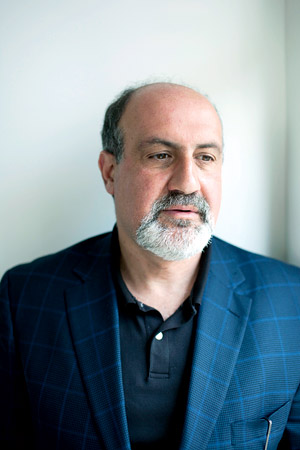


 Nassim Nicholas Taleb


