Google will add a feature to Chrome that will block "bad ads." Meanwhile, Funding Choices will let you pay sites for an ad-free experience. Google helps kids "Be Internet Awesome." Amazon announces a way to get Prime on the cheap, and an inexpensive "Ice" phone. HomePod vs Google Home vs Amazon Echo.... FIGHT! Jason's Pick: Kotlin for Beginners (Udacity) Stacey's Thing: Snooz Danny's Stuff: Personal Search Tab
Month: September 2017

Checkin Beverly Hills Aesthetic Dental Care
Getting the chompers polished

Checkin ARCO
Jumpin’ Jack Flash

Those faeries from the Bacchanalia the other day really got wrecked

Instagram filter used: Clarendon
Photo taken at: Dunsmore Park

Checkin Home Restaurant
Coffee

Checkin Spectrum
Returning the old modem to finish out service on our account.

Checkin IKEA Restaurant & Cafe
Pulled pork sandwich with an expansive view of the 5 freeway


View out of the IKEA restaurant and cafe of Burbank and the I-5
Pulled Pork Sandwich
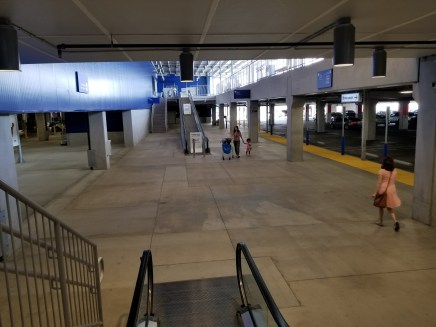
This IKEA is so huge they can afford to leave all this space otherwise unenclosed.

Checkin IKEA
Bookcases from a place so large it feels like an airport outside. They even have massive luggage carts inside.


Reply to Homebrew Website Club: One Year In by Jonathan Prozzi
Congratulations Jonathan!
I really appreciate your “Updated Goals and Purpose” section as they’re something I’ve been slowly beginning to crack away at as well. I’ve begun some work on a book geared toward Gen2+ users as well as doing some additional outreach. I’ve even got a domain registered to target that particular market.)
If you think it would help, I’m happy to help spitball with you to create a more cohesive plan that some of us can work on both individually and as a group.
👓 Decentralized Web Pt 3: Join the IndieWeb | Michael McCallister: Notes from the Metaverse
In recent months, I’ve been learning a lot about the “IndieWeb,” an idea spread by folks who understand that the Web offers a unique platform where ordinary people without the financial clout of the 20th century publishing industry could still potentially reach millions with their ideas.
But to be honest, I’m not sure I can tell you why — and how — to join up any better than Chris Aldrich did in this piece on AltPlatform. So just go over there now.
I know Michael has been working at the IndieWeb bit for a while, so this is some nice praise.

Checkin City of Pasadena Schoolhouse Garage
Good morning Pasadena

Checkin Cross Campus Old Pasadena

🔖 Upcoming Special Issue “Information Theory in Neuroscience” | Entropy (MDPI)
As the ultimate information processing device, the brain naturally lends itself to be studied with information theory. Application of information theory to neuroscience has spurred the development of principled theories of brain function, has led to advances in the study of consciousness, and to the development of analytical techniques to crack the neural code, that is to unveil the language used by neurons to encode and process information. In particular, advances in experimental techniques enabling precise recording and manipulation of neural activity on a large scale now enable for the first time the precise formulation and the quantitative test of hypotheses about how the brain encodes and transmits across areas the information used for specific functions. This Special Issue emphasizes contributions on novel approaches in neuroscience using information theory, and on the development of new information theoretic results inspired by problems in neuroscience. Research work at the interface of neuroscience, Information Theory and other disciplines is also welcome. A special issue of Entropy (ISSN 1099-4300). This special issue belongs to the section "Information Theory". Deadline for manuscript submissions: 1 December 2017
Checkin IKEA
Back for a second load
I don’t often weigh myself, but a few people in the past week have said I look like I’ve lost weight. Since I recently unpacked the scale, I thought I’d change out the batteries and see what I’m up to. I was shocked to discover that I’m down to 169.3 pounds! I think this may be the first time in over 20 years that I’m sub-170. For most of the past year I think I’d been hovering around 185 with a high somewhere around 192.
I’m hoping that the changes I’ve made recently in the move will continue on. Perhaps I can get down to the 155-160ish that I ought to be for my height?