I supported the president in dozens of articles, radio and TV appearances. I won’t do it any longer.
A nice overview for the case against him.
I supported the president in dozens of articles, radio and TV appearances. I won’t do it any longer.
An open source, MIT licensed project that I’ve been personally spending a lot of time on, for almost a year. – In a nutshell, Phở Networks lets you create independent social media outlets. – Phở Networks is singularist; because it allows you to create any form of social media, with a simple language that many sysadmins have already familiarized themselves with in the UNIX world; ACL — access-control lists. You may use Phở Networks as your blogging engine, but you can also create a whole new Facebook. Need proof? Just visit the pho-recipes Github repo. – Phở Networks is lightning fast and massively scalable, because it takes an unorthodox approach as to how it handles data. With Phở, data is stored and served warm right off the RAM, as it is built on top of Redis. With this unconventional RAM-first design choice (in contrast to caching, which most high-scale web sites have opted into), Phở Networks won’t be cheap (for now), but it will be blazing-fast and super low-maintenance by avoiding the limitations of sharding and hard-drive friction.
We launched this blog less than three months ago to explore the latest in Open Web technologies. Things like the IndieWeb movement, blockchain apps, API platforms, Open AI, and more. AltPlatform has always been an experiment, as I made clear in our introductory post. However, from a publishing point of view the experiment hasn’t worked out as we had hoped. To put it plainly, the page views haven’t eventuated – at least in a sustained way. So it’s time to try something new. We’re going to pivot into something a bit different…soon.
I love ricmac’s conceptualization of blogging and hope it comes back the way he–and I–envision it.
Following months of hard work, we are finally ready to publish our 2017 e-book, Education and Technology: critical approaches. This bilingual collection brings together 12 chapters written by researchers based in Brazil, Australia, Scotland, England and USA. The work has been edited by Giselle Ferreira, Alexandre Rosado e Jaciara Carvalho, members of the ICT in Educational Processes Research Group, who maintain this blog (mostly in Portuguese – at least so far!). From the editors’ Introduction: "This volume offers a measure of sobriety in reaction to the excesses and hyperboles found in the mainstream literature on Education and Technology. The pieces (…) tackle questions of power and consider contextual and historical specificities, escaping the usual euphoria that surrounds digital technology and adopting different perspectives on our current historical moment."
Is blockchain poised to be “the next big thing” in education? This has become a question I hear with increasing frequency about a technology that, up until quite recently, was primarily associated with the cryptocurrency Bitcoin. The subtext to the question, I suppose: do educators need to pay attention to the blockchain? What, if anything, should they know about it?

Instagram filter used: Normal
Photo taken at: Altadena, California

Instagram filter used: Clarendon
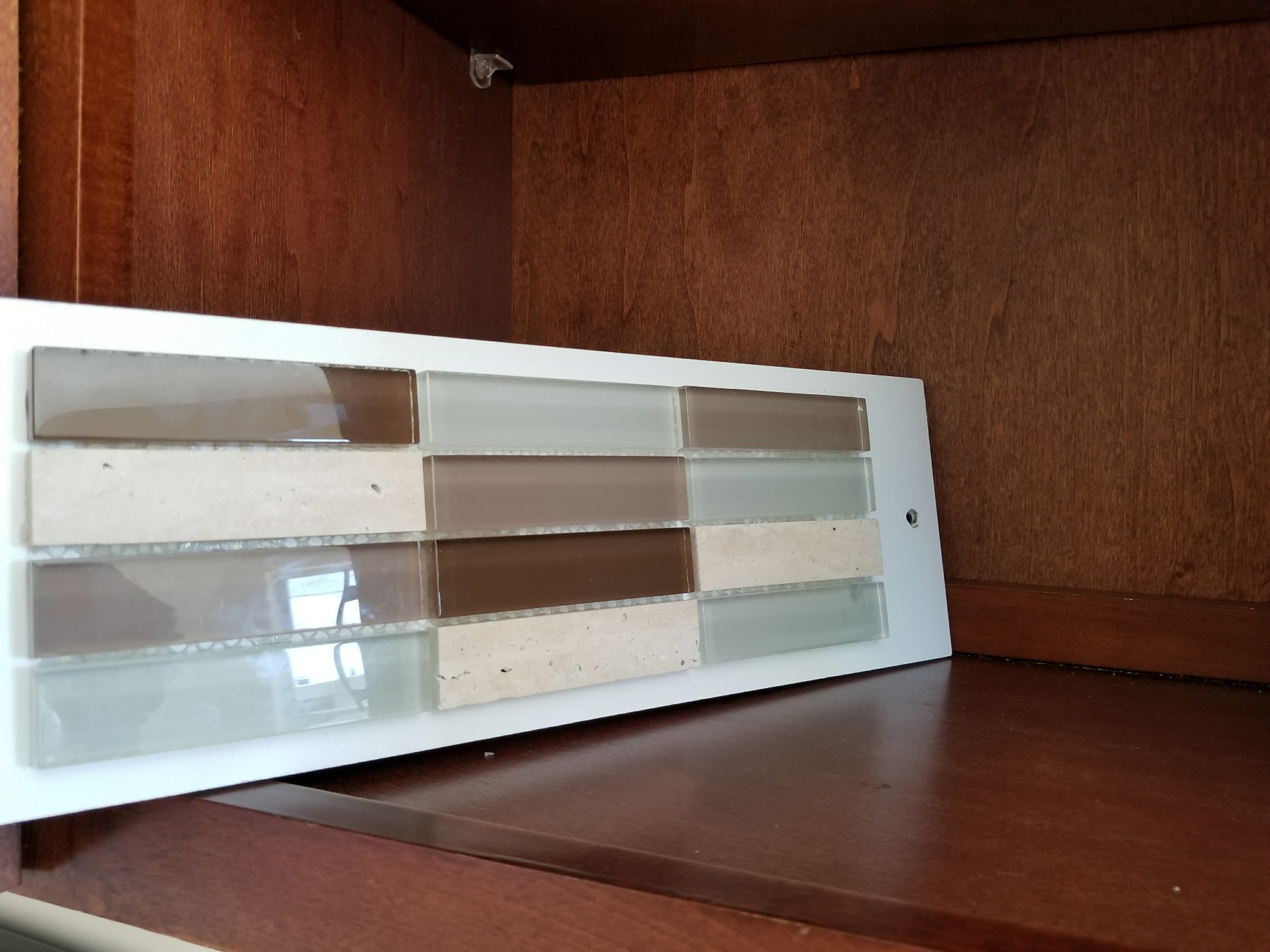
Photo taken at: Dunn Edwards Glendale

Instagram filter used: Normal
Photo taken at: Glendale, California
I’ve been running this site as a “member” supported site since July of 2012. That’s what I call my subscription based, paywall model, a member-site. I’ve tried a lot of different methods to what I charge for, over the years, so I know a thing or two about subscriptions. I’m not selling software, but the consumer mindset on most any recurring payment is similar across the aisles. I’m sure Amazon could tell you some amazing stories about people being unwilling to use ‘Subscribe and Save’, but we are going to have to wait awhile for that TED talk.
Most distributed publishing tools are simply too complex for most users to adopt. Mastodon may have overcome that problem, borrowing design ideas from a successful commercial product. But the example of lolicon may challenge our theories in two directions. One, if you’re unable to share content on the sites you’re used to using – Twitter, in this case – you may be more willing to adopt a new tool, even if its interface is initially unfamiliar. Second, an additional barrier to adoption for decentralized publishing may be that its first large userbase is a population that cannot use centralized social networks. Any stigma associated with this community may make it harder for users with other interests to adopt these new tools.
The US Government subpoena to DreamHost this week for visitors of an anti-Trump website and backbone internet companies like CloudFlare kicking off “The Daily Stormer” are particularly intriguing in the larger ecosystem as well.
I think there’s a lot here that’s both interesting to the IndieWeb community and from which we can all learn.
As I’m thinking about it, I wonder a bit what happens to the role of “community manager” in a larger decentralized and independent web? I hope it’s tummelers like Tantek Çelik, Kevin Marks, Jeremy Keith, Martijn van der Ven and others who continue to blaze the trail.

What's high school football mean to this Texas town? Absolutely everything when the stakes are as high off the field as they are on.
I have successfully gotten the fake LinkedIn account in my name deleted. To prevent someone from doing this again, I signed up for LinkedIn. This is my first -- and only -- post on that account. Now I hear that LinkedIn is e-mailing people on my behalf, suggesting that they friend, follow, connect, or whatever they do there with me. I assure you that I have nothing to do with any of those e-mails, nor do I care what anyone does in response.
There was also another code error which was mixing many of the checkins into my longer form articles. I’ve got a temporary fix, but need to create a filter to fix things longer term. While fixing it, I couldn’t help hearing the haunting words of Richard MacManus who recently said “…I certainly don’t want a bunch of other peoples’ checkins clogging up my feed reader.” Though I’ve spent some time trying to split out content types, I can’t help but think he was referring specifically to me. Sorry Richard!